Source Customized Arcade Fishing Game Machine for Arcades, Malls, and Entertainment Centers
Explore 30 listings for the customized arcade fishing game machine, featuring options for single or multiplayer modes with varying screen sizes and voltage requirements. Buyers can compare specifications like coin capacity, certifications, and packing details to find the right unit for their venue.
Key considerations
Products List


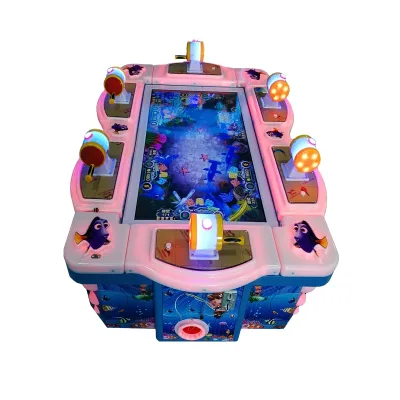
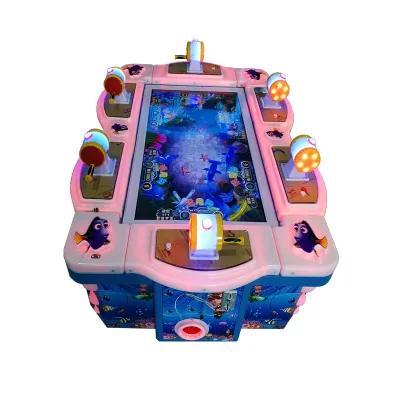


Comprehensive Sourcing Guide
Strategic Sourcing Guide for Customized Arcade Fishing Game Machines
The global market for arcade entertainment has seen a significant shift toward interactive, skill-based gaming experiences, with the customized arcade fishing game machine emerging as a dominant category. For procurement professionals and business owners, sourcing these units requires a nuanced understanding of technical variability, compliance landscapes, and the specific customization options available. Unlike standard off-the-shelf consumer electronics, these machines are often tailored to specific venue requirements, ranging from coin-operated arcade halls to family entertainment centers. This guide provides a disciplined approach to evaluating suppliers and products, grounded in observed market data and essential verification protocols.
Technical Specifications and Hardware Configuration
When evaluating a customized arcade fishing game machine, the first step is to scrutinize the physical and functional specifications. The hardware architecture varies significantly depending on the intended use case. Observed data indicates that these machines are constructed primarily from metal or a combination of wooden and metal materials, ensuring durability in high-traffic environments. The structural integrity is often reinforced with a wooden frame and protected by bubble film during shipping, a standard practice for large, delicate arcade units.
Screen size is a critical differentiator. Buyers must verify the display dimensions against their venue's spatial constraints. Market observations reveal a wide range of screen options, including 43-inch, 55-inch, 65-inch, 86-inch, and even 100-inch displays. The physical footprint of the machine also varies; specific models have been observed with dimensions such as 2100mm by 1600mm by 800mm, while others may be listed as 215cm in width, 153cm in depth, and 75cm in height. It is imperative for buyers to confirm the exact standard dimensions for the specific model number, such as HZJ-00379 or HZJ-1144, as these figures directly impact floor planning and electrical outlet placement.
Power requirements are another essential technical consideration. While some units operate on a standard 110V supply, others support a dual-voltage range of 110V/220V, offering flexibility for international deployment. The plug type must match the local grid infrastructure, with US plugs being a common specification for certain markets. Furthermore, the control interface is typically button-based, though the number of players supported can range from single-player configurations to multi-player setups accommodating 2, 3, 4, 6, 7, 8, 10, or even 12 participants simultaneously. This scalability allows operators to maximize revenue per square foot by selecting a configuration that matches their target audience size.
Customization Capabilities and Operational Flexibility
The core value proposition of this product category lies in its high degree of customization. Unlike generic arcade games, these machines are often built to order, allowing operators to tailor the experience to their brand identity. The "Customized" attribute is a standard feature, with customization services explicitly available from suppliers. This flexibility extends to the software version, which is frequently offered in both Chinese and English, ensuring that the user interface is accessible to a diverse customer base.
Color schemes are typically customizable, often described as "as Picture" or tailored to specific design requests, allowing the machine to blend seamlessly with existing venue decor. The coin capacity is another area where customization plays a role; units are designed to hold anywhere from several hundred to a couple of thousand coins, depending on the internal mechanism and the expected volume of play. Currency detection systems are also a key operational feature, with many units supporting single-currency detection to streamline transactions and reduce mechanical complexity.
For businesses seeking a unique market position, the availability of OEM (Original Equipment Manufacturer) and ODM (Original Design Manufacturer) services is a critical factor. These services enable buyers to modify the exterior casing, branding, and even the internal game logic to create a proprietary product. The warranty periods observed in the market range from 12 to 15 months, which serves as a baseline for after-sales support expectations. However, buyers should note that warranty terms are subject to the specific supplier agreement and may vary based on the extent of customization requested.
Compliance, Certification, and Safety Standards
Navigating the regulatory landscape is a non-negotiable aspect of sourcing arcade equipment. Compliance ensures that the machines can be legally operated in various jurisdictions and meet safety standards for public use. The most frequently observed certifications include CE (Conformité Européenne), which indicates compliance with health, safety, and environmental protection standards for products sold within the European Economic Area. Additionally, FCC (Federal Communications Commission) certification is often cited, ensuring that the electronic devices do not emit harmful levels of radio frequency interference.
In the Chinese market, CCC (China Compulsory Certification) is a mandatory standard for many electronic products. Other relevant certifications observed in the supply chain include RoHS (Restriction of Hazardous Substances), which limits the use of specific hazardous materials in electrical and electronic equipment, and ISO standards, which relate to quality management systems. While some listings mention a "no" standard for specific physical dimensions, this usually refers to the lack of a universal standard for the machine's external size rather than a lack of safety compliance.
Buyers must verify that the specific model they intend to purchase carries the necessary certifications for their target market. Relying on a supplier's general claim of "CE" without verifying the specific test reports for the model number can lead to compliance issues. It is advisable to request documentation proving that the specific batch of machines, including the custom modifications, has undergone the required testing. The origin of the product, often listed as Guangzhou or Guangdong, China, is a significant hub for this industry, but the location of the factory does not automatically guarantee compliance; the certification documents must be product-specific.
Cost Drivers and Pricing Dynamics
Understanding the cost structure of customized arcade fishing game machines is essential for budgeting and ROI analysis. The observed price range in the market spans from approximately $200 to $8,700 USD. This wide variance is driven by several key factors, including screen size, material quality, customization depth, and the complexity of the internal electronics. A basic unit with a smaller screen and minimal customization will sit at the lower end of this spectrum, while a large-format, fully customized machine with premium materials and advanced features will command a price closer to the upper limit.
The Minimum Order Quantity (MOQ) is another critical cost driver. In this category, the MOQ is frequently as low as 1 PC or 1 Set, with some suppliers stating "No Requirement." This low barrier to entry allows small operators to test the market or start with a single unit without significant capital commitment. However, buyers should be aware that while the MOQ is low, the unit price may be higher for single-unit orders compared to bulk purchases. The "New" condition of the products is a standard expectation, but buyers should confirm the status of the inventory to avoid receiving refurbished units if new equipment is required.
Shipping and packaging costs also contribute to the total cost of ownership. The standard packing method involves bubble film and a wooden frame or stretch film, which is necessary to protect the large, fragile screens during transit. For international orders, the cost of freight and insurance can be substantial, particularly for heavy units with dimensions exceeding 2 meters in length. Buyers should factor these logistics costs into their total budget, as they can significantly impact the final landed cost of the equipment.
Supplier Evaluation and Quality Assurance
Selecting the right supplier is paramount to ensuring the long-term success of an arcade operation. Given the low MOQs and the high degree of customization, the market contains a diverse range of suppliers, from large manufacturers to smaller assembly workshops. Buyers should prioritize suppliers who demonstrate transparency in their production process and provide clear documentation for their products. The presence of certifications like CE, FCC, and RoHS should be verified through official test reports rather than relying solely on marketing claims.
Quality control measures should be a central part of the supplier evaluation process. Buyers should inquire about the materials used, specifically the ratio of metal to wood, and the durability of the control buttons and screen. The "Plastic Suction" material mentioned in some contexts suggests specific mechanical components that may require inspection for wear and tear. Additionally, the warranty period, typically ranging from 12 to 15 months, should be clearly defined in the contract, including the scope of coverage for parts and labor.
Supplier reputation and service capabilities are also critical. The availability of OEM/ODM services indicates a supplier's ability to adapt to specific client needs. Buyers should assess the supplier's responsiveness to technical inquiries and their ability to provide software updates or troubleshooting support. The "Service" attribute often includes language support, which is vital for international buyers. A supplier that offers comprehensive after-sales support, including remote diagnostics and spare parts availability, will minimize downtime and protect the investment.
Long-Term Procurement and Operational Strategy
Sourcing arcade fishing game machines is not merely a one-time purchase but a strategic decision that impacts long-term operational efficiency. The durability of the machine, indicated by the "New" condition and robust materials like metal and wood, suggests a long lifecycle. However, the rapid evolution of gaming technology means that software compatibility and hardware upgrades may become necessary. Buyers should consider the flexibility of the system to accept software updates or hardware modifications.
The target demographic for these machines is typically adults aged 15-50 years, with some specific models designed for audiences over 18 years. Understanding the age profile of the target market helps in selecting the appropriate game difficulty and visual style. The "Fishing Hunter Game Machine" and "Coin Pusher" types offer different gameplay mechanics, and the choice between them should align with the venue's overall entertainment strategy.
Finally, buyers should maintain a proactive approach to procurement. Regularly reviewing the market for new models and technologies can provide a competitive edge. Keeping a close relationship with suppliers allows for early access to new features and customization options. By focusing on verified specifications, robust compliance, and reliable service, buyers can build a sustainable arcade operation that delivers consistent entertainment value and financial returns. The combination of low MOQs, extensive customization, and a wide price range makes this category accessible to a broad spectrum of business owners, provided they conduct thorough due diligence.
FAQs
What customization options are available for these machines?
Customization is available for these machines, allowing buyers to tailor features to specific needs. Options include color schemes, software versions in Chinese or English, and OEM or ODM services for branding modifications.
How many players can the machine support simultaneously?
The number of players varies by model, supporting configurations for 1, 2, 3, 4, 6, 7, 8, 10, or more participants. Buyers should verify the specific player count for the desired model number before purchase.
What certifications do these machines typically hold?
These machines often hold certifications such as CE, FCC, CCC, RoHS, and ISO. Buyers must verify that the specific model batch carries the necessary documentation for their target market's regulatory compliance.
Can the coin capacity be customized for high-volume venues?
Yes, the coin capacity can range from several hundred to a couple of thousand coins depending on the internal mechanism. This allows operators to select a unit that matches their expected transaction volume.
What is the minimum order quantity for purchasing these units?
The minimum order quantity is typically 1 PC or 1 Set, with some suppliers stating no requirement. This low barrier allows small operators to test the market without committing to bulk inventory.
Which screen sizes are available for these arcade machines?
Available screen sizes include 43, 55, 65, 86, and 100 inches, with specific models offering different dimensions. Buyers must confirm the exact standard dimensions to ensure they fit their venue's spatial constraints.